
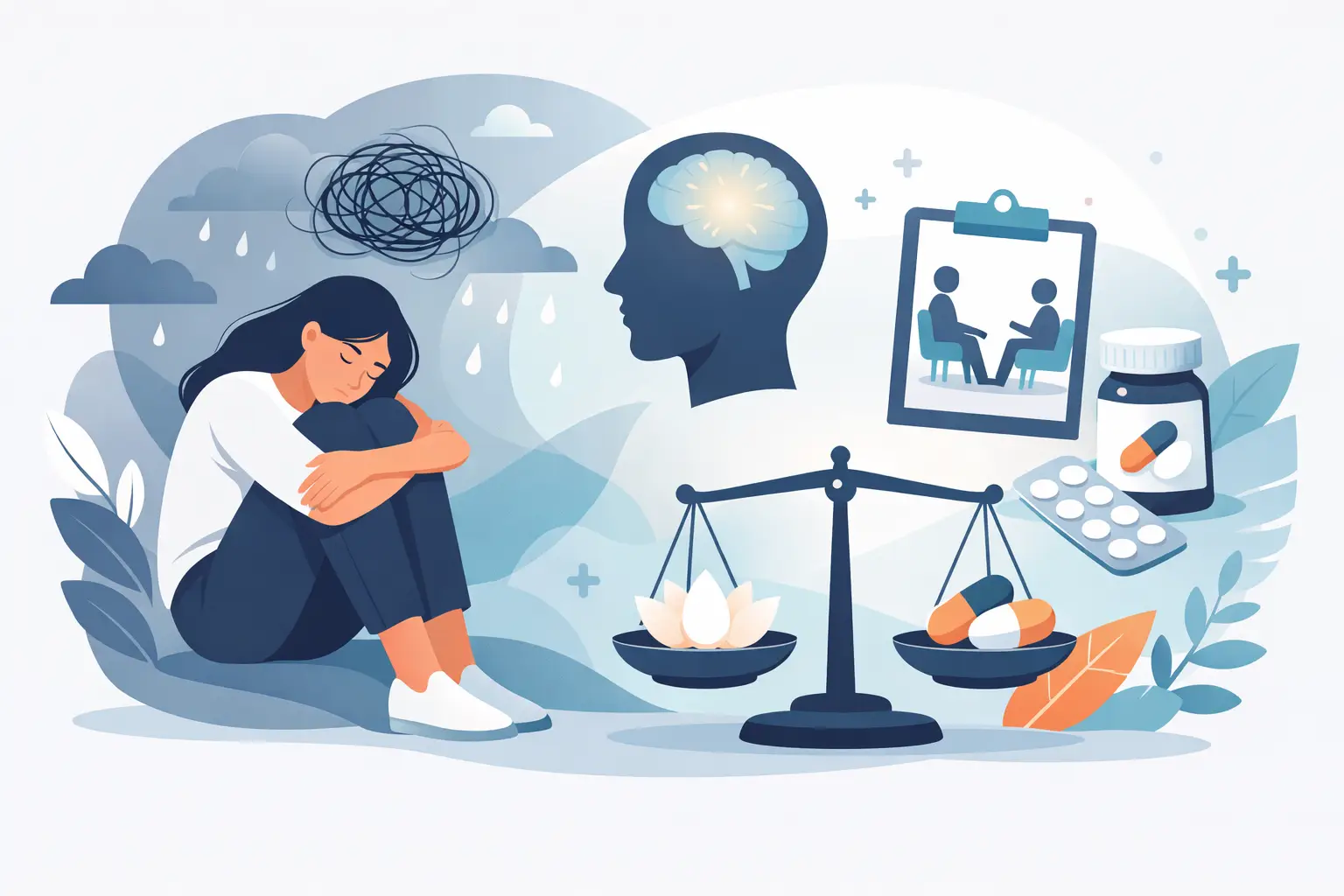
When anxiety starts shaping your sleep, work, relationships or even a simple trip to the shops, the question becomes very practical very quickly – what treats anxiety disorder in a way that actually helps day to day? For most adults, the answer is not one single fix. The most effective treatment usually depends on the type of anxiety, how severe symptoms are, how long they have been going on, and whether there are other health issues involved.
Some people need therapy first. Some need medication support to settle symptoms enough to function. Many do best with both. That combination matters because anxiety is not just stress or a bad week. It can affect the body, thoughts, behaviour and routine all at once.
What treats anxiety disorder in real life?
The short answer is that anxiety disorders are commonly treated with psychological therapy, prescribed medication, or a mix of both. Lifestyle changes can help as well, but they are usually support measures rather than stand-alone treatment for moderate to severe anxiety.
That distinction is worth making early. Breathing exercises, better sleep and less caffeine can absolutely make a difference. But if someone is having panic attacks, avoiding daily tasks, or feeling constantly on edge for weeks or months, they may need a more structured treatment plan.
Different anxiety disorders can also respond a little differently. Generalised anxiety disorder, panic disorder, social anxiety disorder and phobias share some features, but treatment is still tailored to the person. A treatment that works well for one person may feel too sedating, too slow, or simply not effective for another.
Therapy is often a first-line treatment
For many adults, therapy is one of the most effective long-term answers to what treats anxiety disorder. Cognitive behavioural therapy, often called CBT, is commonly recommended because it helps people identify thought patterns that drive anxiety and replace them with more realistic, useful responses.
This is not just about positive thinking. Good therapy gives structure. It helps people notice triggers, challenge catastrophic thinking, reduce avoidance and practise new coping strategies. Over time, that can lower the intensity and frequency of symptoms.
Exposure-based therapy can also help in certain cases, especially for phobias, social anxiety and panic-related avoidance. The idea is gradual, supported exposure to feared situations so the brain stops treating them as constant threats. It can feel uncomfortable at first, but for the right person it can be highly effective.
Therapy does take time and effort. It is not a quick purchase-and-solve option. But it often builds lasting skills that remain useful well beyond the immediate anxiety episode.
Medication can be an important part of treatment
For adults with persistent or disruptive symptoms, medication may play a key role in what treats anxiety disorder. This is especially true when anxiety is affecting sleep, appetite, work performance, concentration or daily functioning.
Several types of medication may be prescribed. Selective serotonin reuptake inhibitors, or SSRIs, are commonly used as longer-term treatment. They are not instant-relief medicines, and they may take a few weeks to reach full effect. For many people, though, they reduce the background intensity of anxiety and make therapy easier to engage with.
Other antidepressant-style medicines may also be considered, depending on symptoms and medical history. The right option depends on factors such as side effects, other medications, previous response and whether low mood is part of the picture as well.
There are also fast-acting medicines such as benzodiazepines, which may be prescribed in some situations for short-term relief. These can be useful when symptoms are acute and overwhelming, but they are generally not viewed as the best long-term answer on their own. That is because they can cause drowsiness, affect alertness and, in some cases, lead to dependence if used inappropriately or for extended periods.
This is where proper medical oversight matters. A medicine that helps one person through a rough patch may be unsuitable for another person with a different history, job requirement or health condition.
What treats anxiety disorder best often depends on severity
Mild anxiety may improve with therapy, routine changes and close follow-up. Moderate to severe anxiety often needs more active treatment. If symptoms are constant, physical, or starting to limit normal activity, medication and therapy together may offer the strongest results.
There is also the issue of timing. Some people need immediate symptom relief so they can sleep, work or leave the house. Others can wait for slower-acting treatment to build gradually. Neither approach is more legitimate than the other. Treatment should reflect the reality of the symptoms, not an idealised version of coping.
A practical plan often starts with a proper assessment. That means looking at symptom patterns, possible triggers, co-existing depression, substance use, medical conditions and current medicines. Anxiety can overlap with other issues, and that overlap changes treatment choices.
Daily habits help, but they are not the whole answer
People often ask whether exercise, diet, mindfulness or sleep changes can treat anxiety on their own. Sometimes they help a great deal, especially when symptoms are mild or stress-related. But for diagnosed anxiety disorders, these strategies are usually part of support care rather than the full treatment.
Reducing caffeine can help if anxiety comes with racing thoughts, shakiness or panic-like symptoms. Regular movement can improve sleep and lower baseline tension. A consistent routine can also reduce the unpredictability that often feeds anxious thinking.
Still, there is a trade-off here. Lifestyle changes are valuable, but they can be hard to maintain when anxiety is already high. Telling someone with severe anxiety to simply meditate more or get outside more often can miss the point. If symptoms are intense, treatment may need to reduce the anxiety first so healthy habits become realistic again.
When medication access and convenience matter
For many adults, a big part of managing anxiety is not only choosing the right treatment but being able to access it consistently. Busy schedules, privacy concerns and difficulty getting to a physical pharmacy can all get in the way of regular treatment.
That is why convenience matters. Reliable online ordering, clear product information and home delivery can make ongoing treatment easier to manage, especially for repeat medication needs where a prescriber has already advised an appropriate plan. MedsNSW speaks to that need by focusing on accessible service, dependable supply pathways and support that fits around real life.
Convenience should never replace proper prescribing, but it can absolutely improve follow-through. And with anxiety treatment, follow-through matters. Stopping and starting medication without guidance, skipping repeats or changing doses on your own can make symptoms harder to stabilise.
Signs you may need more than self-help
Some people wait too long because they assume anxiety is something they should just push through. If symptoms are interfering with work, social life, sleep or everyday tasks, it may be time to look beyond self-help.
That is especially true if you are having frequent panic attacks, constant dread, physical tension that does not settle, or avoidance that is shrinking your world. If anxiety is leading to alcohol or sedative misuse, or if it is coming with depression or hopelessness, proper support becomes even more urgent.
There is no prize for waiting until things get worse. Early treatment can be simpler, safer and more effective than trying to recover after months of escalating symptoms.
Choosing the right treatment path
The best answer to what treats anxiety disorder is usually the one that fits your symptoms, medical history and daily reality. For some, that means starting with therapy. For others, it means medication plus therapy from the outset. And for many, it means adjusting the plan over time rather than expecting the first option to be perfect.
Treatment is rarely one-size-fits-all. A medicine can help but still need dose changes. Therapy can work but take a few sessions before it clicks. Side effects may need to be balanced against benefits. The goal is not perfection in the first week. The goal is steady, reliable improvement that helps you function and feel more in control.
If anxiety has been running the show for a while, getting support is not overreacting. It is a practical step. The right treatment can make daily life feel manageable again, and that is a worthwhile place to start.