
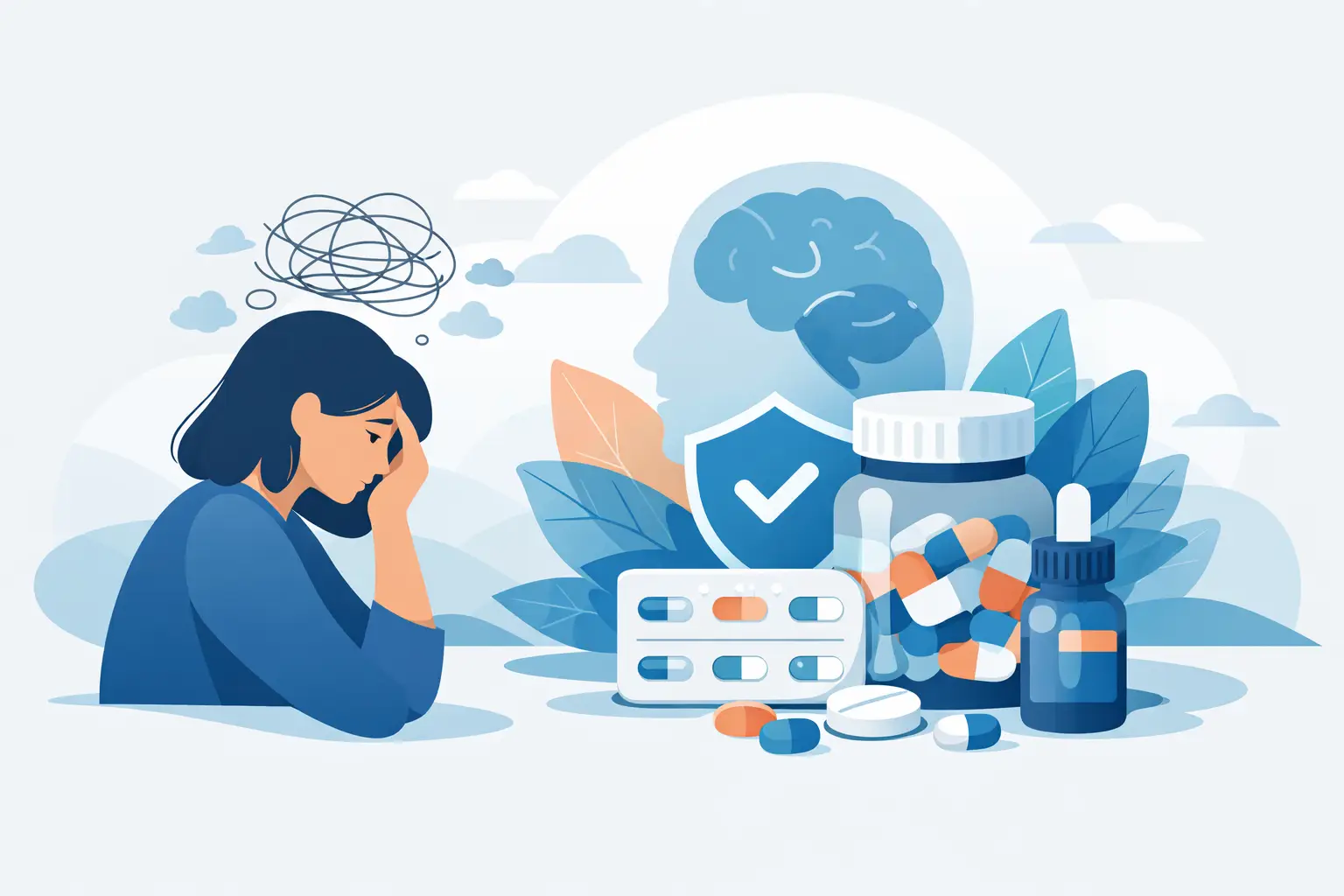
If you are comparing treatment options and want answers without the run-around, this guide to anxiety medications is built to help you make sense of what is available, what each option is for, and what to ask before you order or start treatment. Anxiety medicines are not all interchangeable, and choosing the right one depends on your symptoms, your health history, and how quickly you need relief.
For some people, anxiety feels like constant background tension. For others, it shows up as panic attacks, racing thoughts, poor sleep, a tight chest, or a stomach that never settles. That difference matters, because medications used for short-term panic relief are not always the same as the ones used for ongoing anxiety management. The best choice is usually the one that matches your day-to-day symptoms, your tolerance for side effects, and your doctor’s advice.
Guide to anxiety medications: the main types
Most anxiety medications fall into a few well-known categories. Each works differently, and each comes with trade-offs.
Benzodiazepines are often the first group people recognise. Medicines such as Xanax, Valium, Clonazepam, Ativan and Serepax are commonly used for short-term relief of acute anxiety or panic symptoms. They can work quickly, which is one reason they are often discussed when someone needs fast support. The trade-off is that they can cause drowsiness, affect coordination, and may lead to dependence if used too often or for too long.
SSRIs, or selective serotonin reuptake inhibitors, are commonly prescribed for longer-term anxiety treatment. These are generally used for ongoing conditions such as generalised anxiety disorder, panic disorder and social anxiety. They do not usually work immediately. It can take a few weeks before the full effect is felt, and some people notice nausea, sleep changes or headaches early on.
SNRIs are similar in that they are often used for ongoing anxiety management rather than immediate symptom relief. They may suit some people better than SSRIs, especially if there are overlapping mood symptoms, but they can also bring side effects such as sweating, dry mouth or increased blood pressure in some cases.
Beta blockers are sometimes used for physical symptoms of anxiety, especially in specific situations. If your main issue is a pounding heart, shaking hands or a surge of adrenaline before a presentation or event, they may help with the body side of anxiety. They do not treat every type of anxiety equally, so they are often more situational than broad-spectrum.
Buspirone is another option for some people with ongoing anxiety. It is not as fast-acting as benzodiazepines, but it does not carry the same level of sedation or dependence risk. That makes it worth discussing when long-term daily management is the priority.
When fast relief matters and when it does not
One of the biggest points of confusion is speed. Many people searching online want relief now, especially if they are dealing with panic attacks, travel anxiety, severe restlessness or sleep disruption linked to anxiety. In that situation, a doctor may consider a medicine with a quicker onset.
That does not automatically make it the best long-term option. Fast-acting medicines can be useful, but they are usually prescribed with more caution. If your anxiety is frequent, ongoing and tied to everyday life rather than isolated episodes, a medication designed for regular management may be more suitable.
This is where expectations matter. Some medicines help within hours. Others take weeks. Some are better for physical symptoms, while others target the broader pattern of anxious thinking and mood. A reliable treatment plan often balances speed, safety and sustainability rather than chasing the fastest effect alone.
How to compare anxiety medications properly
A practical guide to anxiety medications should not pretend there is one perfect choice for everyone. The better approach is to compare them across a few basics: how fast they work, how long they are usually used for, what side effects are common, and whether they are likely to affect work, driving or sleep.
If you need something for occasional high-stress moments, your conversation will be different from someone who is managing chronic anxiety every day. If you have a history of substance dependence, that changes the picture as well. If you are older, pregnant, taking pain medicines, or using other sedating medications, safety becomes even more important.
It is also worth thinking about lifestyle fit. A medicine that causes marked drowsiness may not suit someone who drives for work, cares for children, or needs to stay sharp throughout the day. Another option may be less sedating but take longer to build effect. Neither is automatically better. It depends on what problem you are trying to solve.
Common side effects and safety points
All medicines come with possible side effects, and anxiety medications are no exception. Benzodiazepines can cause sleepiness, slower reaction times, dizziness and memory issues, especially at higher doses or when combined with alcohol. They should be used carefully because regular use can lead to tolerance and dependence.
SSRIs and SNRIs can cause stomach upset, headaches, agitation, appetite changes, sweating and sexual side effects. Some of these settle after the first few weeks, but not always. That is why follow-up matters. If the side effects are strong or the medicine is not helping, the plan may need adjusting.
It is also important not to stop some anxiety medications suddenly, particularly if you have been taking them regularly. Withdrawal symptoms can happen, and they can be unpleasant. Any changes in dose should be guided by your prescriber.
Alcohol and other sedating medicines can increase risk. This is especially relevant for people who are also taking opioid pain relief, sleep medicines, or other central nervous system depressants. Mixing these without medical advice is not safe.
Buying anxiety medication online: what matters
Convenience is a real factor. Many Australians prefer online ordering because it is private, straightforward and saves time. If you are managing an ongoing condition, home delivery can make regular access easier and reduce the stress of repeated pharmacy visits.
That said, convenience should never come at the expense of safety. Make sure any medicine you buy is supplied through properly regulated pharmacy channels, with clear product information, secure ordering and responsive customer support. Trusted sourcing matters, especially for high-demand medications where quality and authenticity are essential.
A service-first pharmacy experience should make the process simpler, not riskier. That means transparent availability, clear ordering steps, and support if you have questions about dispatch, packaging or repeat access. For many buyers, that combination of privacy, quality assurance and doorstep delivery is exactly what makes online pharmacy worthwhile.
Questions to ask before choosing a medication
Before starting or switching treatment, ask what the medicine is meant to help with, how quickly it should work, and what side effects are most likely in the first week or two. Ask whether it is for short-term relief, long-term control, or both as part of a broader plan.
It is also smart to ask what to avoid while taking it, whether it can affect driving, and what happens if you miss a dose. If you already take medication for pain, sleep, diabetes or weight management, mention that clearly. Interactions are not a minor detail.
And if you have tried anxiety medication before, say what happened. A medicine that worked well in the past may be relevant again. Just as importantly, one that caused strong side effects or did not help may point you towards a better fit this time.
Finding the right support without overcomplicating it
Anxiety treatment does not have to be confusing, but it does need to be personal. Some people need quick relief for acute symptoms. Others need steady, longer-term support. Some do best with medication plus counselling or lifestyle changes, while others begin with one step at a time.
The key is to choose with clarity. Know what the medication is for, know the trade-offs, and use a pharmacy provider you can trust for consistent supply, quality-assured products and reliable support. If you are exploring options through a service like MedsNSW, keep the goal simple: safe access, clear information and treatment that fits your life.
The right anxiety medication is rarely the one with the loudest name or fastest promise – it is the one that helps you feel more steady, more in control, and more able to get on with your day.