
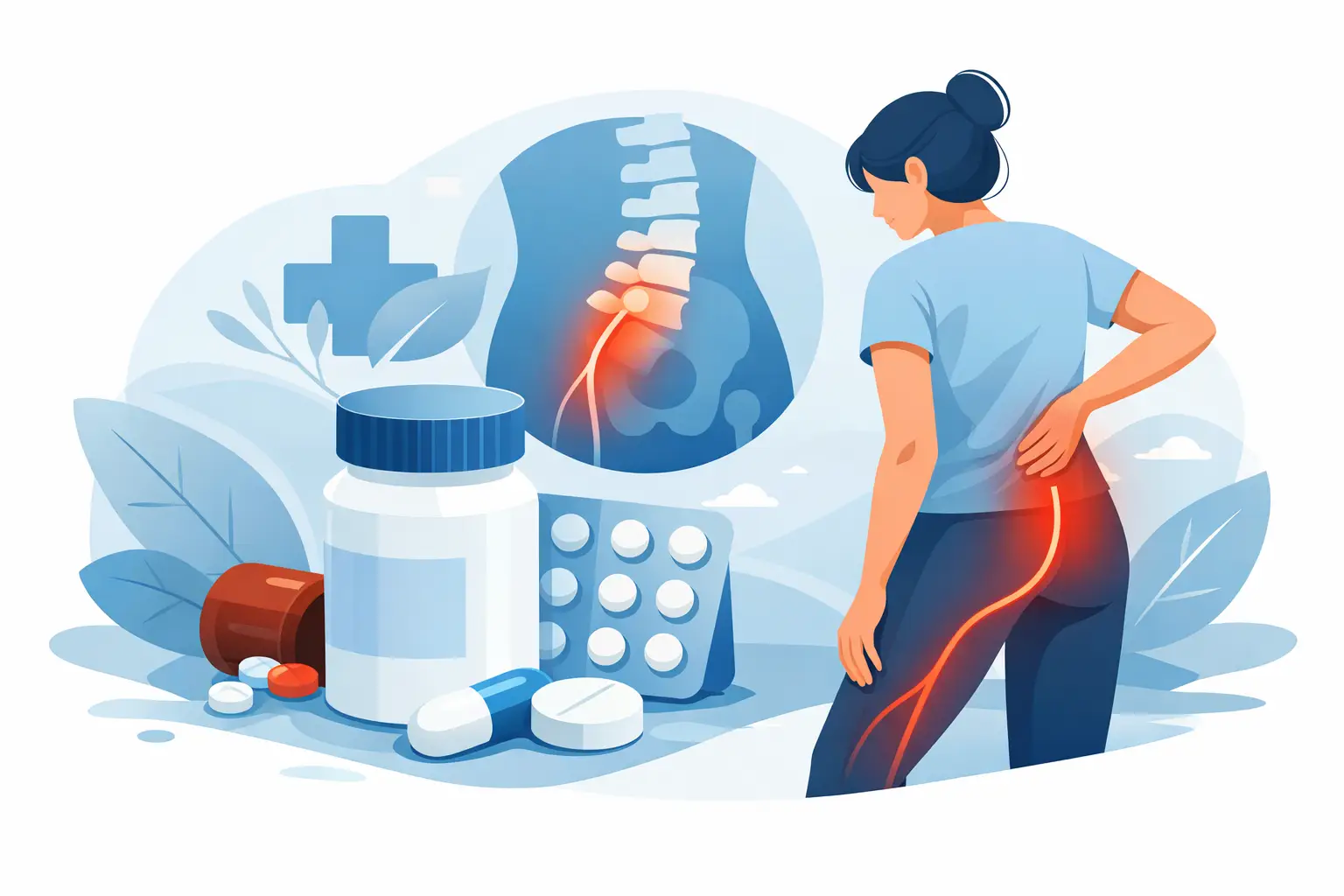
Sciatica can turn ordinary movement into a chore fast. One awkward twist getting out of bed, one long drive, or one day spent sitting too much, and suddenly that sharp pain running from your lower back down your leg is calling the shots. If you are looking for pain relief medication for sciatica, the right option depends on how strong the pain is, how long it has been going on, and whether inflammation, muscle spasm, or nerve irritation is driving it.
What pain relief medication for sciatica can help?
Sciatica is not a condition on its own so much as a symptom pattern. It usually happens when the sciatic nerve is irritated or compressed, often because of a bulging disc, spinal narrowing, or inflammation around the nerve. That matters because not every pain medicine works equally well for nerve pain.
For mild to moderate discomfort, many people start with over-the-counter options such as paracetamol or anti-inflammatory medicines. These can be useful when sciatica flares up and you need short-term relief to keep moving, sleep better, or get through the day. Anti-inflammatories may help more if swelling and inflammation are part of the problem, while paracetamol may suit people who cannot take certain anti-inflammatory medicines.
When pain is stronger, more persistent, or interfering with work and sleep, prescription treatment may be considered. Depending on your symptoms and medical history, a prescriber may look at stronger pain relief, short-term opioid medicines, muscle relaxants, or medicines sometimes used for nerve pain. The best fit is rarely about choosing the strongest tablet available. It is about choosing the option that matches the type of pain and the level of risk.
Over-the-counter options for sciatica pain
Paracetamol is often the easiest starting point because it is widely used and generally well tolerated when taken correctly. It may not fully settle true nerve pain, but it can take the edge off and is sometimes enough for milder flare-ups. If your pain is stopping you from resting, even partial relief can make a real difference.
Non-steroidal anti-inflammatory drugs, often called NSAIDs, include medicines such as ibuprofen and naproxen. These may help if your sciatica is linked with inflammation around the lower back or irritated tissues pressing on the nerve. They can be effective for some people, but they are not suitable for everyone. If you have stomach ulcers, kidney problems, heart disease, are pregnant, or take blood thinners, you need to be more careful.
Topical products such as anti-inflammatory gels are sometimes used for general back discomfort, though they tend to be less helpful when the pain is radiating from the lower back into the leg. Sciatica is deeper and more nerve-driven than a simple muscle strain, so topical relief is usually limited.
When prescription medication may be needed
If over-the-counter treatment is not enough, it may be time to speak with a prescriber. This is often the case when pain is severe, lasts more than a few days without improving, or makes it difficult to walk, sit, sleep, or work normally.
Some people are prescribed stronger pain medicines for short-term use. This can include opioid-based medication when pain is acute and significant. These medicines can offer relief, but they also come with clear trade-offs. Drowsiness, constipation, nausea, and dependence risk all need to be considered. That is why they are generally better suited to carefully managed short-term use rather than ongoing self-treatment.
In some cases, medicines used for nerve-related pain may be considered instead of or alongside standard painkillers. These are not instant-fix tablets, and they do not suit every patient, but they may help when sciatica is persistent or clearly neuropathic in nature. A healthcare professional will usually consider your symptoms, your other medicines, and your broader health profile before recommending them.
Muscle relaxants may also be used in select cases, especially when lower back spasm is adding to the problem. They can be useful for short periods, though they may cause sedation and are not a universal answer.
Choosing the right medication depends on your symptoms
Not all sciatica feels the same. Some people describe a burning track down the leg. Others get stabbing pain in the buttock, calf, or foot. Some mainly notice numbness, tingling, or weakness. The more your pain behaves like nerve irritation, the less likely basic painkillers alone will be enough.
That is why a one-size-fits-all approach rarely works. If your pain is mild and recent, starting with a simple option may be reasonable. If the pain is severe, repeatedly returning, or paired with pins and needles or weakness, you may need more targeted treatment and a proper assessment rather than trialling random products.
It is also worth looking at timing. Pain that is worst at night may affect sleep and recovery, while pain that spikes with sitting may point to mechanical pressure that medication alone will not solve. Relief matters, but so does figuring out what is aggravating the nerve in the first place.
What to watch before taking pain relief medication for sciatica
Convenience matters, especially when you are in pain and want treatment sorted quickly, but safety still comes first. Even common medicines can interact with other treatments or be unsuitable with certain conditions.
If you already take medicines for anxiety, sleep, blood pressure, diabetes, or chronic pain, check compatibility before adding anything new. Combining sedating medicines can increase risk. Taking too much paracetamol by accident is also more common than many people realise, especially if you use multiple products at once.
If you are considering stronger prescription pain relief, it is worth being honest about how long you expect to use it. Short-term support during a flare-up is one thing. Ongoing use without review is another. The goal should be to reduce pain enough to function while the underlying issue settles or is assessed further.
For customers who prefer the privacy and ease of ordering online, trusted pharmacy access can make the process simpler. MedsNSW focuses on straightforward ordering, quality-assured supply, and support when you need medication access without the usual hassle.
Medication is only part of sciatica relief
Pain tablets can help, but they do not correct the cause of sciatica. In many cases, staying gently active, avoiding long periods of sitting, and managing posture can help more than complete bed rest. Too much rest often makes stiffness worse.
Heat packs may ease muscle tension around the lower back and hip. Some people do well with physiotherapy, especially when exercises are targeted to the likely cause. If a disc issue is involved, certain movements may help while others may aggravate things, so generic stretching is not always the best move.
This is where expectations matter. Medication can reduce the pain enough to keep you moving and sleeping, which is valuable, but it works best as part of a bigger plan. If the pain keeps returning, relying on tablets alone can become frustrating and expensive without solving much.
When sciatica needs urgent medical attention
Most cases of sciatica are painful but not dangerous. Still, there are times when urgent review is needed. If you develop new bladder or bowel problems, numbness around the groin or inner thighs, major weakness in the leg, or rapidly worsening symptoms, seek urgent medical care. Those signs need prompt attention.
You should also get checked if the pain follows a fall or injury, comes with fever, unexplained weight loss, or does not improve over time. Sciatica can be common, but serious causes should not be ignored.
Buying sciatica medication online
Online ordering suits plenty of adults who want privacy, speed, and less running around when pain flares up. The key is choosing a provider that is clear about product quality, support, and supply standards. For over-the-counter products, clarity around active ingredients and safe use matters. For prescription medication, proper approval and responsible dispensing matter even more.
A reliable online pharmacy experience should feel simple, but not careless. You want straightforward browsing, secure ordering, and support if you are unsure which option suits your needs. Fast access is helpful. Informed access is better.
If you are weighing up pain relief medication for sciatica, focus on what matches your symptoms, your health history, and your need for short-term versus ongoing support. Quick relief is a fair priority when the pain is sharp and constant, but the best result usually comes from combining the right medication with the right next step.